

Web design is often misunderstood as a purely visual discipline, but in reality it is a complex process that combines creativity, strategy, technology, and user psychology. Unlike traditional graphic design, web design must function in a dynamic environment where users interact with content across different devices, screen sizes, and contexts. It is not enough for a website to look appealing—it must guide users, communicate clearly, and ultimately achieve business objectives.
A successful web design does not happen by accident. It is the result of a structured process built on clear thinking, informed decisions, and continuous refinement. Below is a comprehensive look at the key stages involved in developing a web design that is not only visually strong but also functional, scalable, and effective.
Understanding the Client: The Foundation of Every Project
Every successful web design begins with one critical step: listening. Before any sketches, layouts, or visual ideas are created, it is essential to fully understand what the client wants to achieve. This goes far beyond surface-level requirements.
A client may initially describe what they want their website to look like, but the real value lies in uncovering why they need it. What are their business goals? Who is their target audience? What actions do they want users to take?
Clarity at this stage prevents costly mistakes later. In many cases, clients provide incomplete or even contradictory information. This is where a professional approach matters. Instead of moving forward with assumptions, it is necessary to ask deeper questions, challenge vague ideas, and define clear objectives from the beginning.
Without this clarity, the project risks becoming a cycle of endless revisions. With it, every design decision becomes purposeful and aligned with a defined goal.
Content Analysis: Designing Around Reality, Not Assumptions
Once the objectives are clear, the next step is to analyze the content that will populate the website. Content is not an afterthought—it is the core around which the entire design should be built.
This includes understanding the volume, type, and quality of materials available. Text, images, videos, and other media elements all influence how a website should be structured. A design that works beautifully with high-quality, large-format imagery may completely fail if the available assets do not meet those requirements.
One of the most common mistakes in web design is creating visually impressive layouts that are disconnected from the actual content. For example, designing a homepage dominated by full-screen images may look stunning in concept, but if the client cannot provide suitable visuals, the final result will feel weak or inconsistent.
Effective web design adapts to the content, not the other way around. It ensures that the available materials are presented in the best possible way, enhancing clarity and impact.
Market Analysis: Learning from the Competitive Landscape
No website exists in isolation. Every project operates within a broader market, where competitors are already communicating with the same audience.
Analyzing this landscape provides valuable insights. By studying other websites in the same sector, designers can identify common patterns in color usage, layout structures, messaging, and functionality. This helps establish a baseline of user expectations.
The goal is not to copy competitors, but to understand the environment in which the website will live. From there, strategic decisions can be made. In some cases, aligning with industry standards builds trust and familiarity. In others, introducing distinctive elements helps the brand stand out.
The most effective approach is often a balanced one. Completely ignoring conventions can confuse users, while blindly following them leads to generic results. The challenge is to find a position that feels both familiar and unique.
The Role of Branding: Starting with the Logo
A website is a digital extension of a brand, and at the center of that brand is the logo. It serves as the visual anchor that influences every design decision.
If a logo already exists, it becomes the starting point for the entire design system. Its colors, typography, and stylistic elements guide the creation of a cohesive visual language. Consistency between the logo and the website strengthens brand recognition and trust.
However, not all logos are created equal. In some cases, an existing logo may feel outdated or misaligned with the company’s current identity. When this happens, it is important to address the issue honestly. Proposing a redesign may seem challenging, but it can significantly improve the overall quality and effectiveness of the project.
The ideal scenario occurs when branding and web design are developed together from the beginning. This allows for complete alignment and a more unified result.
Defining the Visual Language: Creating Consistency and Identity
Once the foundation is set, the next step is to establish a clear visual language for the website. This includes decisions about typography, color palette, iconography, and overall style.
Consistency is key. A well-defined visual system ensures that every page, element, and interaction feels connected. It creates a sense of professionalism and reliability that users can immediately recognize.
Typography plays a particularly important role. Choosing a limited set of fonts—often just one family with different weights—helps maintain clarity and cohesion. Similarly, color choices should be intentional and structured, supporting both aesthetics and usability.
This stage is where creativity comes into play, but it must be guided by logic. Every visual decision should serve a purpose, contributing to the overall experience rather than simply adding decoration.
Information Architecture and Visual Hierarchy: Guiding the User
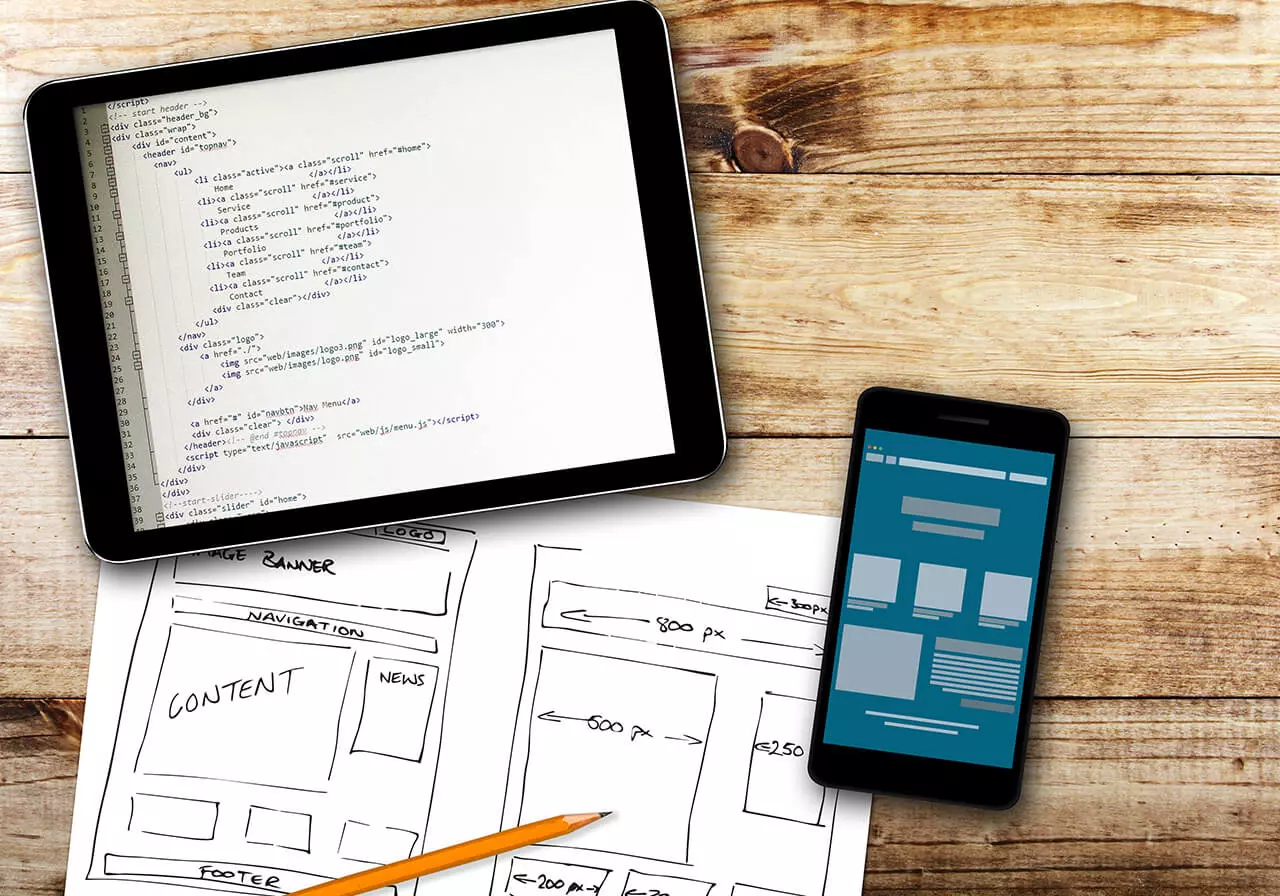
A beautiful design means little if users cannot navigate it effectively. This is where information architecture and visual hierarchy become critical.
Information architecture focuses on how content is organized and structured. It determines how users move through the website and how easily they can find what they are looking for. A clear structure reduces confusion and improves overall usability.
Visual hierarchy, on the other hand, controls how information is presented. Through the use of size, contrast, spacing, and positioning, designers guide the user’s attention to the most important elements first.
These two aspects work together to create a seamless user journey. From the moment a visitor lands on the website, they should intuitively understand what to do next. Whether the goal is to read, explore, or convert, the path should feel natural and effortless.
At the same time, this structure supports search engine optimization. Proper use of headings and content hierarchy helps search engines understand the relevance and importance of each section, improving visibility in search results.
Balancing Aesthetics and Functionality
One of the greatest challenges in web design is finding the balance between visual appeal and practical functionality. These two aspects do not always align naturally.
A design can be visually stunning but difficult to use. Conversely, a highly functional design may feel uninspiring or generic. The goal is to integrate both elements into a cohesive whole.
Certain creative techniques, while attractive, can negatively impact performance or usability. For example, overly complex animations or heavy visual effects may slow down loading times or interfere with navigation. Similarly, design trends that prioritize style over clarity can reduce accessibility.
Professional web design requires discipline. Creativity should be encouraged, but not at the expense of usability, responsiveness, or SEO performance. These are non-negotiable elements that define whether a website succeeds or fails.
A Process That Drives Results
Developing a web design is not about following rigid steps, but about applying a structured approach that adapts to each project. From understanding the client’s goals to refining the final user experience, every stage contributes to the overall outcome.
What separates average websites from exceptional ones is not just visual quality, but the thinking behind them. A well-designed website aligns business objectives with user needs, transforming ideas into meaningful digital experiences.
Final Thoughts: Beyond Design, Toward Strategy
Web design today is a strategic discipline. It sits at the intersection of branding, technology, and user behavior. Success requires more than creativity—it demands clarity, planning, and execution.
By following a thoughtful process, it becomes possible to create websites that are not only visually engaging but also functional, scalable, and effective. In a digital landscape where competition is constant, this approach is not optional—it is essential.
A great website does more than represent a business. It works for it.